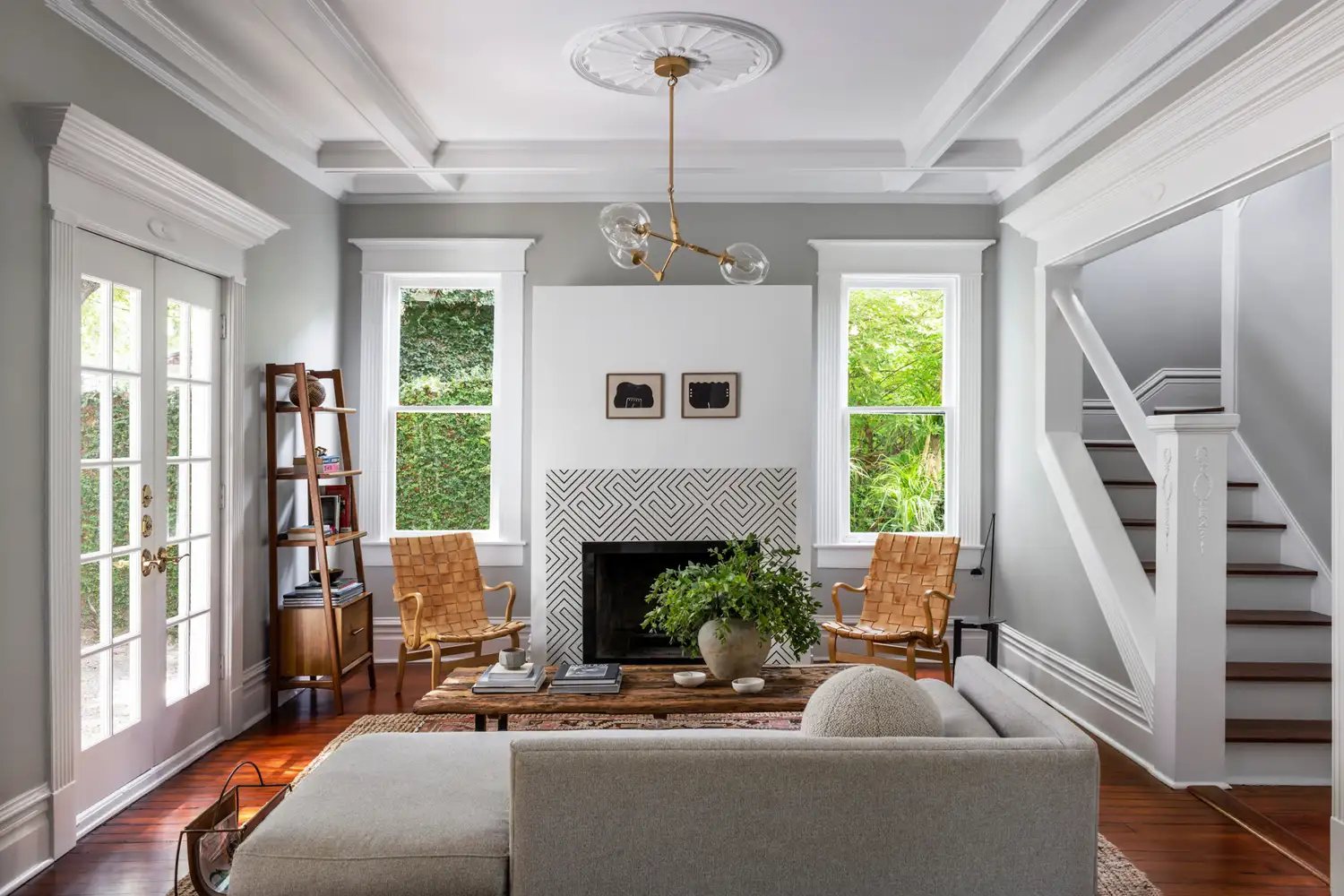
A home often feels warm before you notice why. It may be the softness of the light, a familiar texture beneath your hand or the way a room gives people space to settle in. These details can be considered together, rather than added all at once.
Begin with the feeling you want
Before choosing a finish or a furnishing, picture how you want the room to feel during an ordinary day. Calm and airy? Lived-in and layered? A clear sense of purpose can help guide decisions about colour, lighting, materials and the amount of visual quiet a space needs.
Comfort is often found in the details that feel natural to you.
Let natural materials do some of the work
Wood, woven fibres, stone, linen and ceramic finishes bring subtle variation into a room. They can soften a clean-lined space without making it feel busy. A few well-chosen textures often work harder than a room full of competing accents.
Think about light at different moments
Daylight changes as it moves through a home, and the lighting you add can shape the mood after sunset. A mix of ambient light, focused task lighting and a warmer accent can make a room feel more flexible. When planning an update, it helps to consider where people read, gather, cook or simply pause.
Keep the personal in the picture
Art, books, textiles and objects collected over time give a room a sense of belonging. Leave a little breathing room around them, and choose pieces because they mean something to you rather than because they complete a trend.
When the details support the way you live, the result can feel both considered and comfortably familiar. That is a lovely place to begin when you are thinking about renewing an interior.